 5 min read
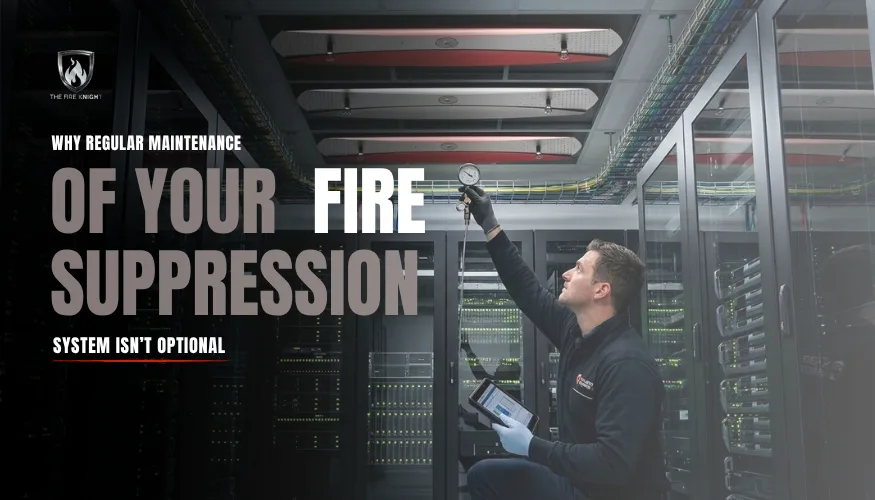
A fire suppression system is a promise about a day that has not happened yet. Nothing about a quiet installation tells you whether that promise will be kept, because a system that has failed looks exactly like one that works. Regular maintenance is the only evidence either way, which is why it is treated as part of the system rather than as an optional service wrapped around it.
What actually degrades between services
Suppression systems rarely fail dramatically. They drift.
- Agent and pressure loss: small leaks reduce discharge volume or pressure long before any indicator changes visibly.
- Nozzles and pipework: dust, corrosion, paint and insect nests restrict or redirect a discharge that was engineered to reach a specific place.
- Detection drift: sensors accumulate contamination, and heat cable and mountings shift on anything that vibrates.
- Power and connectivity: batteries age, supplies get isolated during other work, and a system that has quietly dropped off the network alerts nobody.
- Changes to the protected space: new racking, new equipment or a rearranged layout can invalidate a design that was correct on the day it was commissioned.
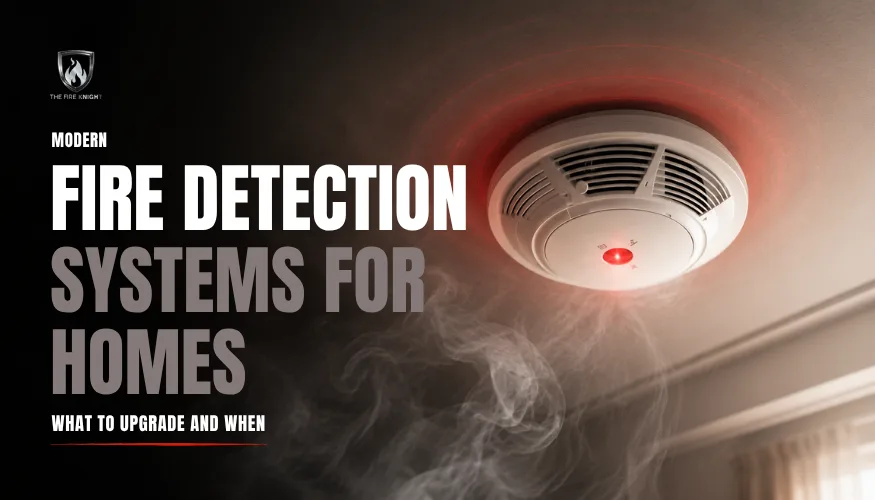
The simplest devices show how ordinary this is. The National Fire Protection Association found that missing, disconnected or dead power sources were the most common reason smoke alarms failed to operate in home fires. The same category of neglect applies to far more expensive equipment.
What a service regime covers
Intervals below are typical rather than universal. The standard that applies in your jurisdiction, and your insurer, set the actual schedule.
| Activity | Typical interval | What it proves |
|---|---|---|
| Visual inspection | Monthly | Nothing is obstructed, damaged, isolated or missing |
| Functional test of detection and alerting | Quarterly or six monthly | The system still senses, and the alert still reaches a person |
| Agent level and pressure check | As specified by the manufacturer | There is enough of the right agent at the right pressure |
| Full service by a competent person | Annually | The installed design still matches the space and its risk |
| Pressure vessel testing | Long interval set by the standard | Containment is sound after years in service |
The standards that define the work
Maintenance is written into the standards themselves rather than left to suppliers. ISO 7240-14 covers design, installation, commissioning and servicing of detection and alarm systems in and around buildings, and ISO/TS 11602-2 does the same for the inspection and maintenance of portable and wheeled extinguishers.
Some countries go further and make routine service a permit condition. In Australia, AS 1851 sets requirements for the inspection, testing, preventive maintenance and survey of fire protection systems, and in Victoria an occupancy permit can be refused where it has not been met. Equivalent regimes exist elsewhere, so confirm what applies to your site rather than assuming a general rule.
Who is responsible, and what competent means
Responsibility for maintenance sits with the person who controls the premises or the asset, whatever the contract says, and it is not discharged by holding a service agreement that nobody checks. Competence matters equally: the person attending should understand the system as designed, not merely tick a form. When a building changes use, or equipment moves, the correct response is to revisit the risk, which is the process ISO 23932-1 describes for fire safety engineering.
Enclosed installations deserve particular attention, because their whole purpose is to sit closed and unwatched. A unit protecting a server room or an electrical cabinet, such as The Comodo, is easy to leave undisturbed for years, and easy to obstruct when the cabinet is rewired by somebody who does not know it is there.
What a lapse actually costs
The obvious cost is a system that does not perform when it is finally needed. The less obvious ones usually arrive first: an audit or inspection that cannot be satisfied because records are incomplete, an insurer asking for evidence of servicing that nobody kept, and repair bills that grew while a small fault went unlogged. For sites where production stops when protection is offline, the interruption is often larger than the repair.
Unattended assets carry the highest exposure, because nobody is present to notice a fault. That applies to outdoor and remote installations and to vehicles and mobile plant, where vibration and washing work against mountings and detection routing every day they operate.
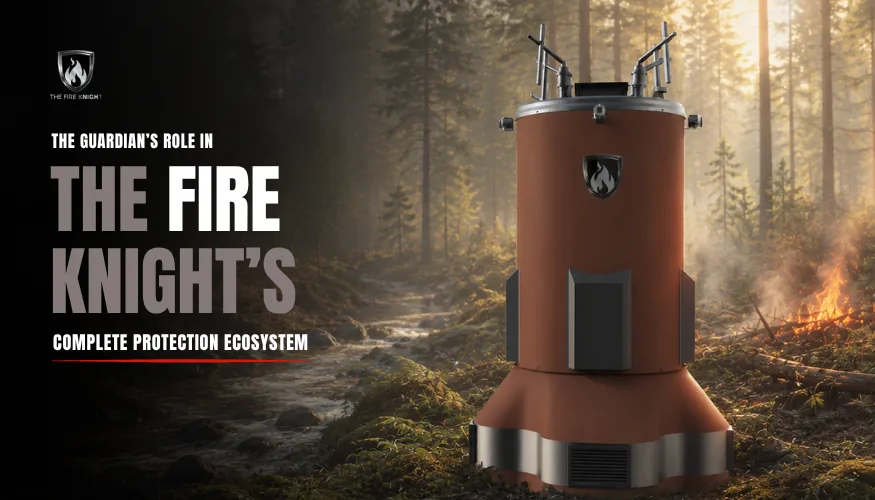
The Fire Knight systems are fire suppression aids and are not classified as fire extinguishers. Systems such as The Guardian, The Sentinel and The Ranger report faults, low battery and connectivity loss automatically, which shortens the time a defect can hide, but self-reporting supports a maintenance regime rather than replacing one.
Frequently asked questions
Follow the manufacturer’s schedule and the standard that applies where the system is installed. A monthly visual check with an annual service by a competent person is a common baseline, but the applicable standard governs.
Yes. Automatic fault reporting catches power, connectivity and some component faults. It cannot inspect a blocked nozzle, corroded pipework, or a layout change that has moved the risk away from the coverage.
Date, who attended, what was tested, what was found and what was corrected, held for as long as your regulator or insurer requires. The same discipline applies to smaller installations, including smart fire protection in homes.
Check the record, not the hardware
The quickest test of any site is to ask for the last service record. If nobody can produce one, the protection is unproven regardless of how new it looks. Explore The Fire Knight systems or speak with our team about a maintenance plan for your sites.