 5 min read
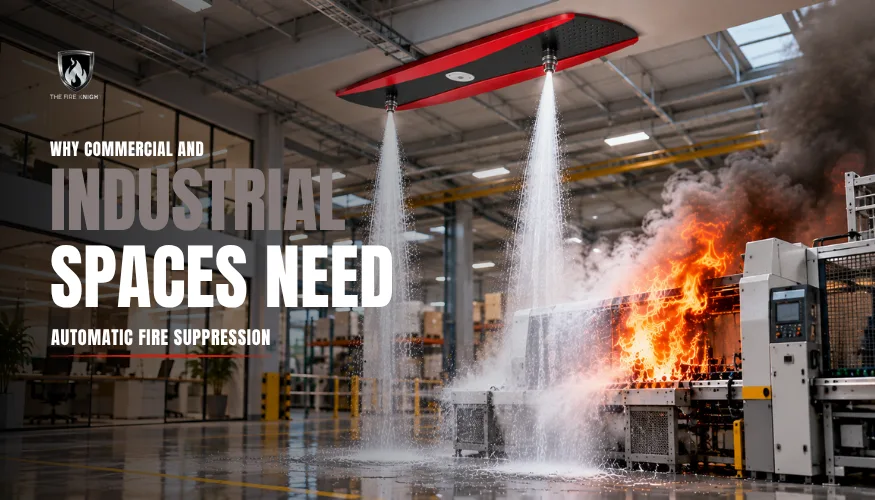
Most commercial and industrial buildings already have fire protection. There are alarms, extinguishers, often sprinklers, and a fire plan on the wall. The trouble is that almost all of it assumes a person is present: someone to hear the alarm, pick up the extinguisher or call the fire service. Many business fires start when nobody is.
Automatic fire suppression closes that gap. It detects a fire at the source and responds on its own, in the minutes before anyone arrives.
The scale of the problem
In the United States, the US Fire Administration estimates around 110,000 nonresidential building fires in 2023, causing more than $3.1 billion in direct property loss.
In England, fire and rescue services attended 13,679 fires in buildings other than homes in the year ending March 2026. The government’s detailed fire analysis found that no smoke alarm was present in 46 percent of them, and 30 percent spread beyond the room where they started. Electrical distribution was the largest specified ignition source, and the average response took 9 minutes 12 seconds.
Put those figures together and the pattern is clear. Many business fires are electrical, many go undetected at first, and the fire service needs time to arrive. Whatever happens in those first minutes decides how much of the business is left.
Why code-required systems are not the whole answer
Building and fire codes exist mainly to protect life: to warn occupants and keep escape routes usable. They are essential, and nothing here replaces them. But they leave predictable gaps for a business:
- Out-of-hours fires: an alarm in an empty factory at 2am may sound for a long time before anyone acts.
- Enclosed equipment: a fire inside an electrical cabinet or server rack can grow before heat reaches a ceiling sprinkler head.
- Machinery: fires inside guarding or engine enclosures are hidden from room-level detection.
- Outdoor yards: pallet stacks, waste bays and plant stored outside sit beyond the building’s systems.
- Water damage: a sprinkler zone protects the structure, but the water can still stop the business for weeks.
Common fire risks in commercial buildings such as overloaded circuits, poor housekeeping and hot work tend to start in exactly these places.
What automatic fire suppression adds
A targeted system watches one hazard, confirms a real fire, releases at the source and tells someone it has done so. That is the logic behind early fire detection: a small fire caught early stays small. Match the system to the space:
| Space | Typical risk | Fire Knight system |
|---|---|---|
| Offices, retail and warehouses | Electrical faults and stored goods, often unattended | The Protector: multi-sensor confirmation, a still image before release, alerts by app, SMS and email |
| Electrical cabinets, server rooms, battery enclosures | Fires hidden inside a closed space | The Comodo: flame and rate of rise sensing with a camera before activation |
| Industrial machinery and generators | Fires inside guarding or enclosures | The Ranger: linear heat detection along the hazard, engineered nozzles |
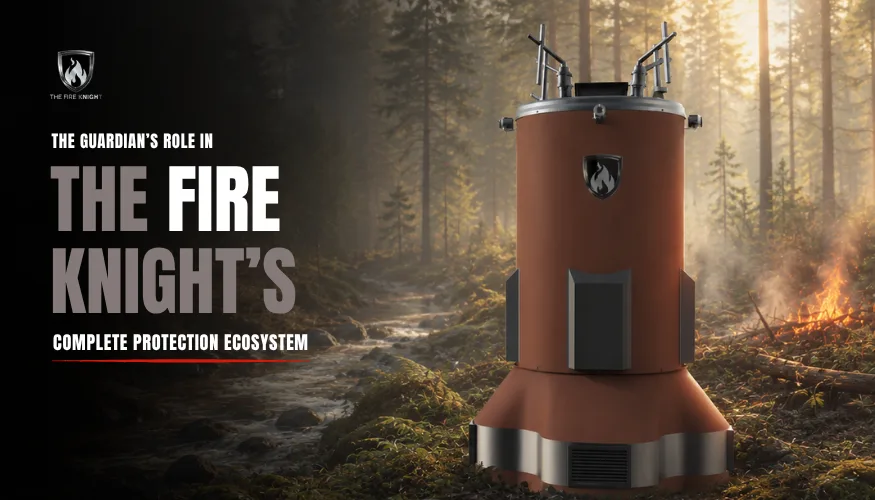
| Yards and outdoor sites | Stock, waste and plant outside the building | The Guardian: 360 degree infrared detection, solar supported, up to 60 metres in diameter |
Where a targeted system is not the answer
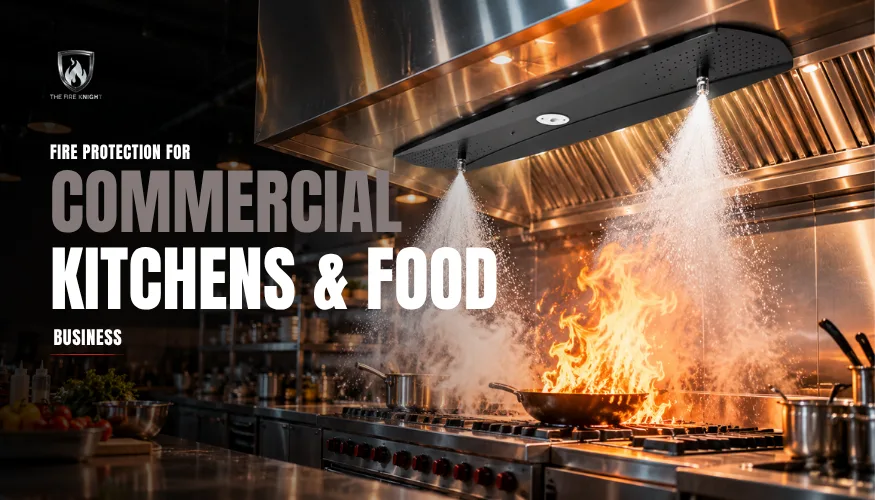
Honesty matters here. Combustible dust needs explosion protection. Flammable liquid processes usually need foam or an engineered gaseous system. Commercial kitchens need a dedicated kitchen system. Large lithium battery storage needs engineered protection and a fire service plan, because cells in thermal runaway can reignite. In each case a suppression aid can support the design, but it is never the primary control.
What the rules say in the USA, UK and Canada
| Country | Key rule | What it means |
|---|---|---|
| United States | IBC and IFC as locally adopted, plus OSHA 1910.160 | Codes set where sprinklers and alarms are required. OSHA covers fixed extinguishing systems that protect or could affect workers. |
| United Kingdom | Fire Safety Order 2005, Article 13 (England and Wales) | The responsible person must provide appropriate firefighting equipment, detection and alarms, based on the fire risk assessment. |
| Canada | National Fire Code of Canada, adopted provincially | Provinces and territories adopt and amend the model code; the local fire marshal decides what applies. |
Automatic suppression aids are usually a risk-based addition rather than a legal requirement. Your authority having jurisdiction, fire and rescue service, or provincial fire marshal decides what is mandatory for your premises
Common mistakes to avoid
- Buying one system for the whole site instead of protecting each hazard.
- Ignoring the alert path: a system that activates silently tells nobody the business needs help.
- Skipping upkeep: dust, vibration and heat wear any system, so regular suppression system maintenance is part of the investment.
Find your unprotected hazards
Walk your site and list the places a fire could start with nobody watching. Then speak with our team about commercial fire protection, see how fire suppression systems save lives and property, or explore The Fire Knight range.
Frequently asked questions
Sprinklers and alarms are required by occupancy and size under local codes. Additional targeted suppression is usually a risk-based choice rather than a legal duty.
No. It protects specific hazards alongside code-required sprinklers, alarms and emergency planning.
Places where fires start unseen or unattended: electrical rooms, server rooms, machinery, warehouses at night and outdoor yards.