 5 min read
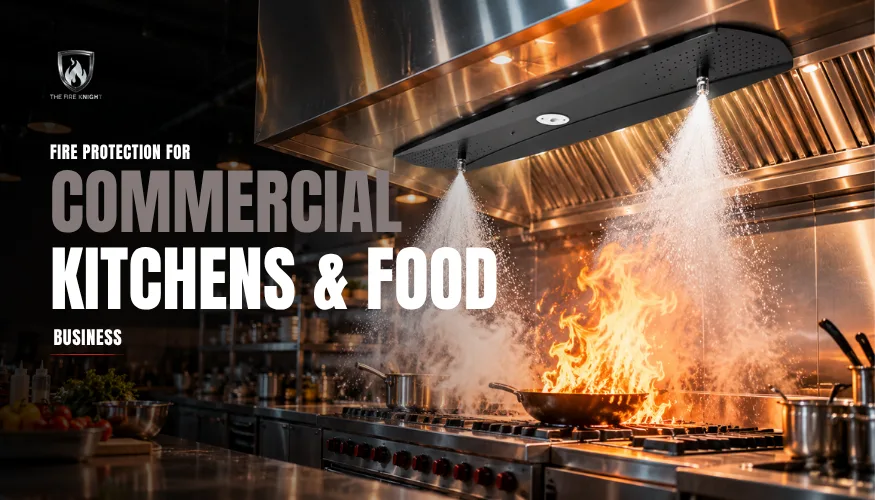
A busy commercial kitchen combines hot oil, open flame, grease-coated ductwork and staff working at speed. It is no surprise that cooking is the leading cause of restaurant fires. What surprises many owners is that the cooking line is often the best-protected part of the business. At the same time, the storerooms, electrical cupboards and dining room after closing are not protected at all.
Good fire protection for a food business treats these as two separate zones, each with its own system.
How restaurant fires start
In the United States, NFPA’s dedicated study of structure fires in eating and drinking establishments recorded an average of 7,410 fires a year between 2010 and 2014, with $165 million in direct property damage each year. Cooking equipment was involved in 61 percent of them, and deep fryers alone in 21 percent.
The usual chain is simple: oil overheats past its ignition point, grease builds up in the hood and duct, or a flare-up reaches residue that should have been cleaned away. Once fire enters the extract duct, it can travel through the building far from where it began.
Zone 1: the cooking line
Fryers, ranges, griddles and chargrills under an extract hood need a dedicated, listed kitchen fire suppression system. These use a wet chemical agent that reacts with hot fat to form a soapy layer that smothers the fire and cools the oil. The system also shuts off fuel and power to the appliances. No general-purpose suppression aid, including ours, is a substitute for it.
| Cooking line essential | Why it matters |
|---|---|
| Listed wet chemical hood system | Designed and tested for grease fires on specific appliances |
| Class K (US, Canada) or Class F (UK) extinguisher | The right portable extinguisher for cooking oil fires; water and ordinary extinguishers can make them worse |
| Regular hood and duct cleaning | Removes the grease that lets fire spread into the extract system |
| Six-monthly system servicing | Nozzles block with grease and fusible links age; an unserviced system may not operate |
| Trained staff | Knowing how to trigger the manual release and when to leave |
Zone 2: the rest of the business
Behind the kitchen sits everything the hood system cannot see: dry stores full of packaging, refrigeration compressors, electrical distribution boards, back offices and dining rooms full of furnishings. Laundry holding oily cloths is a known risk too, because cloths soaked in cooking oil can heat up on their own.
These areas matter most after closing. A restaurant is empty for many hours a day, which is exactly when an electrical fault or smouldering bag of linen can grow unnoticed.
| Area | Typical risk | Suitable protection |
|---|---|---|
| Dining room, back office and dry stores | Electrical faults, stored packaging, out-of-hours fires | The Protector: ceiling-mounted, multi-sensor confirmation, alerts by app, SMS and email |
| Electrical cabinets and server racks | Fires hidden inside a closed space | The Comodo: flame and rate of rise sensing with a camera before activation |
| Cooking line under the hood | Grease and oil fires | A listed wet chemical kitchen system, not a suppression aid |
The alert matters as much as the suppression. An owner who gets a message at 3am can call the fire service minutes earlier, which is the whole point of early fire detection.
What the rules require in the USA, UK and Canada
| Country | Key rule | What it means |
|---|---|---|
| United States | NFPA 96, adopted through local fire codes | Sets hood, duct and fire-extinguishing system requirements for commercial cooking, including servicing at least every six months. |
| United Kingdom | Fire Safety Order 2005 (England and Wales); see workplace fire safety responsibilities | The responsible person must carry out a fire risk assessment and provide suitable equipment, including for cooking hazards. |
| Canada | National Fire Code of Canada and provincial codes such as the BC Fire Code | Cooking exhaust and fire protection systems must be used, inspected and maintained to NFPA 96. |
Your authority having jurisdiction, fire and rescue service or provincial fire marshal decides exactly what applies to your premises.
Common mistakes in food businesses
- Throwing water on burning oil, which causes a violent flare-up.
- Letting duct cleaning slip because the hood looks clean from below.
- Skipping servicing: see why regular fire suppression system maintenance is not optional.
- Protecting only the kitchen and ignoring the wider fire risks in commercial buildings, from overloaded sockets to blocked exits.
Protect the whole business, not just the line
Check that your hood system is serviced, then look at everything around it. To discuss the rooms your kitchen system cannot reach, talk to our team about restaurant fire protection, read how fire suppression systems save lives and property, or explore The Fire Knight range.
Frequently asked questions
A listed wet chemical system over cooking appliances that produce grease-laden vapours, plus a Class K or Class F extinguisher, as required by your local code.
In the United States and Canada, NFPA 96 requires servicing by a qualified person at least every six months.
No. Cooking oil fires need a system designed for them. Suppression aids suit other areas of the premises.