 5 min read
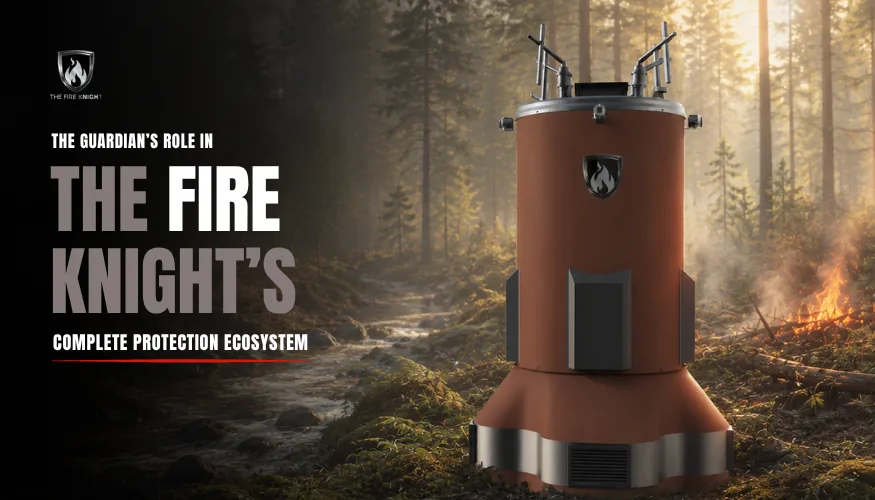
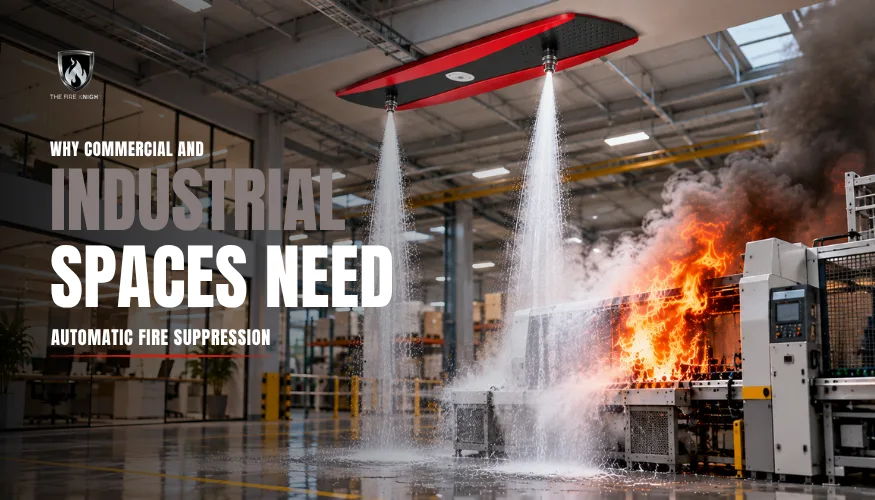
Fire protection is usually bought one device at a time, in the order that problems present themselves. Sites are not attacked that way. A fire arrives in a particular zone, at a particular hour, and finds whatever protection happens to exist there. The Guardian occupies the zone most often left uncovered, which is everything outside the building line, and it is easier to understand once the whole ecosystem is laid out.
Why the outdoor zone became the weak point
The scale of outdoor fire has changed. According to the European Commission’s Joint Research Centre, 1,079,538 hectares burned across the EU in 2025 in 7,783 mapped fires, nearly double the 2006 to 2024 average and the highest burnt area recorded since monitoring began.
For an asset owner the significant part is not the total. It is that the fire reaching a substation, a plantation, a farm building or a remote depot usually starts outside it, often at night, often where there is no mains power, no water main and nobody on site to notice. Indoor protection cannot help with any of that, because by the time an indoor device sees a fire, the outdoor one has already been lost.
Outdoor protection has to work differently
Indoor detection depends on smoke collecting against a ceiling. Outdoors there is no ceiling, wind disperses the smoke, and a device that waits for it will wait indefinitely. Outdoor detection therefore relies on heat and flame signatures, or on visual analysis of the kind covered by ISO/TS 7240-29 for video fire detectors.
Three further conditions apply outdoors. Power cannot be assumed, so the system carries its own. Weather, dust, wildlife and interference are constant, so the hardware has to survive them without attention. And the fire service is further away than it would be in a town, so the minutes a system has to cover alone are longer. Those constraints, rather than any preference for automation, are what make an autonomous unit the practical answer.
What The Guardian does, and what it does not
The Guardian is an autonomous outdoor unit. It uses 360 degree infrared detection, which responds to the heat signature of a fire rather than to visible light, so it continues to work in darkness, smoke and poor weather. A solar supported battery system allows it to run off-grid. On activation it discharges a water based, non-toxic and biodegradable retardant through targeted nozzles, with tank options of 1,000, 2,000 or 3,000 litres and up to twelve minutes of continuous discharge.
Two behaviours matter more than the headline specification. Operators can see and control the unit remotely, so a confirmed threat can be met before it develops rather than only after a trigger. And the retardant treats the ground it lands on for up to fourteen days, which turns a single discharge into a defensible perimeter rather than a one-off wetting.
The limits matter just as much. Each unit covers up to 60 metres in diameter, so a large site is a question of how many units and where, not whether one will do. It is a fire suppression aid rather than a fire extinguisher, and it does not replace fire service attendance, site fire planning or vegetation management around assets.
How the five systems divide the site
| Zone | What threatens it | System |
| Outdoor ground, perimeter, forestry and infrastructure | External and wildland fire, often off-grid and unattended | The Guardian |
| Occupied interiors: homes, offices, warehouses | Ignition in rooms people leave empty for hours | The Protector |
| Enclosed compartments: server rooms, cabinets, telecom shelters | Electrical faults developing unseen in small spaces | The Comodo |
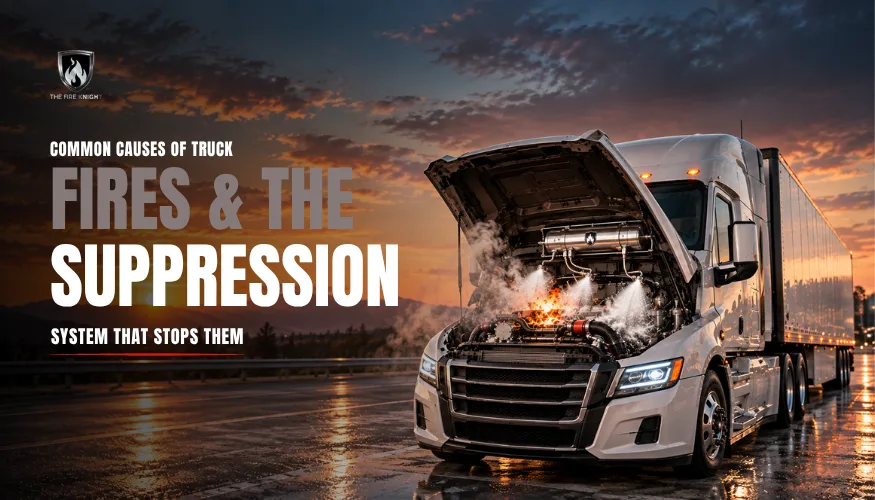
| Vehicles and transport fleets | Engine bay, fuel and battery fires while in use | The Sentinel |
| Mobile plant and heavy machinery | Hot surfaces and hydraulics on equipment that moves away from fixed protection | The Ranger |
Why the layers are worth more together
A layered approach is the standard engineering position rather than a marketing one. ISO 23932-1 sets out fire safety engineering as a risk led process in which measures are selected against defined objectives, and ISO 7240-14 covers how detection and alarm systems are designed, installed, commissioned and serviced around buildings.
In practice the layers help each other in two ways. Each unit reports its own status and alerts remotely, so one operator can see a whole site rather than one room, and the outdoor layer buys time for everything inside it. Machinery and vehicle protection follows its own logic again, covered by ISO 19353 on fire prevention and fire protection for machinery, which is why vehicle fire safety is treated separately.
Frequently asked questions
Yes. It runs on a solar supported battery system and discharges from its own tank, which is what makes it suitable for remote infrastructure, forestry and agricultural sites.
That follows from the site layout, since each unit covers up to 60 metres in diameter. Assets are usually protected by placing units around what matters most rather than by attempting blanket coverage.
No. It is a suppression aid that acts early in a specific zone. Site fire planning, vegetation management, statutory detection and fire service attendance all remain necessary.
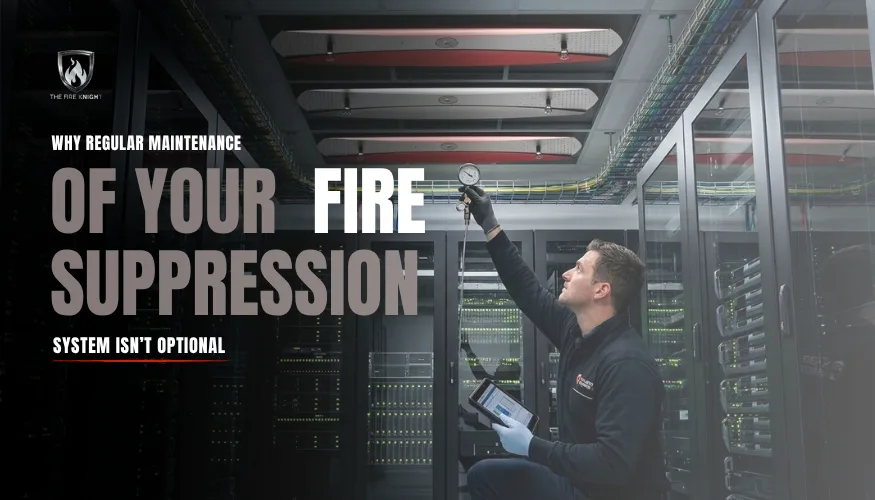
Tank levels, nozzles, power and detection all need scheduled checks, and an unattended site hides faults for longer than an occupied one. This is why regular maintenance is treated as part of the system rather than an extra.
Map your zones before choosing hardware
The useful exercise is to draw the site, mark which zones have nobody watching them, and work outwards from the assets you cannot afford to lose. Explore The Fire Knight systems or speak with our team about the zones that concern you.