 5 min read

Smart fire protection is usually sold as a product: a device on the ceiling with an app attached. What actually protects a home is everything around that device, which is the assessment deciding where it goes, the alerting that reaches somebody who can act, and the servicing that keeps it working three years later. Judged as a purchase, smart fire protection for homes looks simple. Judged as a service, it looks quite different, and the difference is what decides whether the system still works on the night it is needed.
Why Home Fire Protection Usually Fails
The weak point is rarely the detection technology. The National Fire Protection Association reports that almost three out of five home fire deaths in the United States came from fires in properties with no smoke alarms (41 percent) or with alarms that failed to operate (16 percent). The most common reason for failure was a missing or non-functional power source: batteries removed, batteries dead, or hardwired units disconnected.
English data shows the same pattern from another angle. In dwelling fires attended in the year ending March 2026, a smoke alarm was present but did not operate in 19 percent of cases, and present without raising the alarm in a further 10 percent, according to Home Office fire statistics.
Batteries are rarely pulled at random. They come out after repeated unwanted alarms from cooking or steam, which is why the ability to tell a nuisance from a fire is not a convenience feature. It is the reason a system is still armed a year later.
These are maintenance outcomes rather than engineering ones, so any protection service should be judged on whether it prevents that quiet drift into a system that no longer works.
What a Smart Fire Protection Service Should Include
- Assessment and siting: identifying where ignition is likely, where a fire would go unseen, and therefore where detection belongs. Placement decides performance more than specification does.
- Verified detection: flame, heat and gas sensing that must agree before anything activates, which is what makes automatic response safe to have in a kitchen.
- Alerting that leaves the building: app, SMS and email notification to named people, so an alarm at three in the morning reaches someone even when the house is empty.
- Automatic first response: suppression aimed at the seat of the fire during the minutes before the fire service arrives.
- Testing, servicing and fault reporting: a written schedule, plus automatic warnings for faults, low battery and lost connectivity. This is the part that answers the failure data above.
Standards describe this lifecycle explicitly. ISO 7240-14 covers design, installation, commissioning and servicing of detection and alarm systems in and around buildings, and in the United Kingdom BS 5839-6 is the domestic code of practice covering the same stages. Smoke alarm devices sold in Europe are covered by EN 14604. What is legally required depends on your country, and on whether the property is owner occupied or rented.
Questions Worth Asking Any Provider
| Ask this | Why it matters | A good answer sounds like |
|---|---|---|
| How does the system confirm a fire before acting? | Verification separates a useful response from a false discharge | More than one sensor type has to agree |
| Who receives the alert if we are away or asleep? | An alert nobody answers is not protection | Named recipients, with escalation if unanswered |
| How will I know it has stopped working? | Power failure is the leading cause of non-operating alarms | Automatic fault, low battery and connectivity alerts |
| What does servicing cover, and how often? | The lifecycle decides the outcome, not the installation day | A written schedule and a maintained record |
Matching Systems to The Spaces in a Home
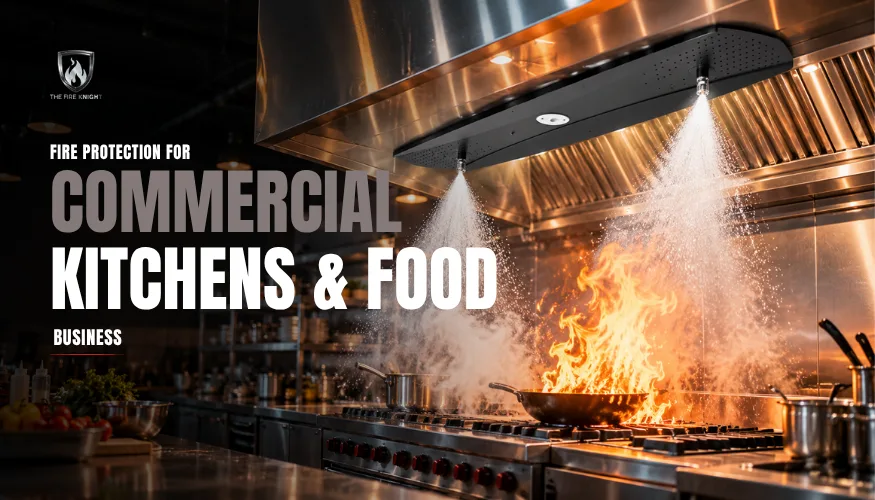
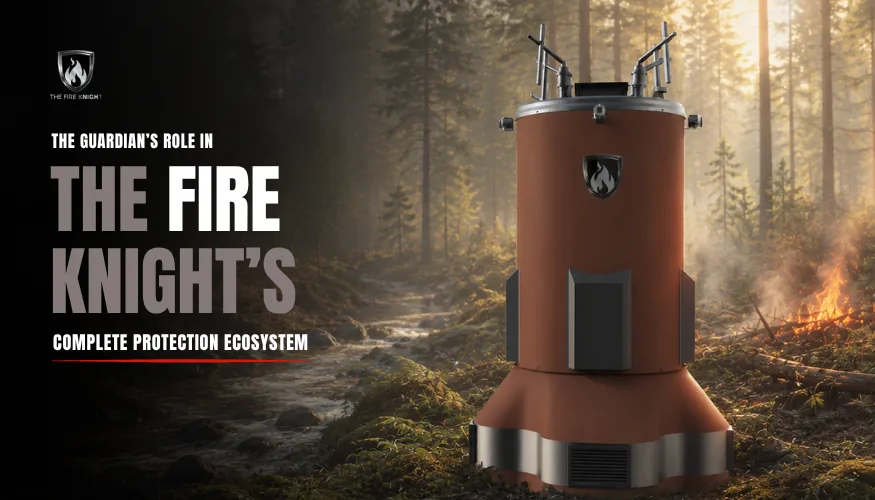
Living areas and kitchens are where most accidental dwelling fires start, and a ceiling mounted unit such as The Protector suits them because it verifies before it deploys a water based, non-toxic suppressant. Enclosed spaces behave differently: garages, plant cupboards and electrical cabinets are small, unattended and full of ignition sources, which is the case for The Comodo. Properties with grounds, outbuildings or a rural boundary face an external threat instead, and The Guardian is solar supported for exactly those off-grid positions.
What a Service does not Remove
Connected technology changes what happens in the first minutes. It does not change your obligations. Required alarm provision, escape routes and an evacuation plan everyone in the household understands all still apply, and they matter more in a home than any device does. The same logic runs through home and office fire protection generally, and through the case for modern home fire detection.
The Fire Knight systems are fire suppression aids and are not classified as fire extinguishers. They are designed to limit damage and buy time alongside mandatory provisions and the fire service, not in place of them.
Frequently Asked Questions
It depends who else would answer. If the household travels, works shifts or includes people who could not act alone, a monitoring arrangement adds a responder. Otherwise, alerts to named people may be enough.
Follow the manufacturer’s instructions and the code that applies where you live. BS 5839-6 sets out user testing and periodic servicing for domestic premises in the United Kingdom, and other countries publish equivalent guidance.
Some water is involved in any suppression. The Protector holds 10 or 15 litres and targets the seat of the fire rather than flooding the building, so the volume is small compared with the damage an unchecked fire causes.
Start with an Assessment
The useful first step is not choosing a device. It is deciding which spaces would go unwatched, and for how long. Explore The Fire Knight systems or speak with our team about your property.