 5 min read
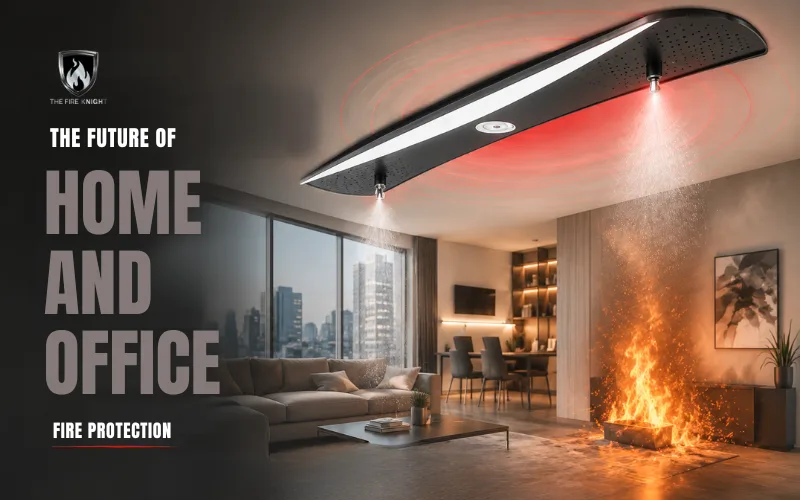
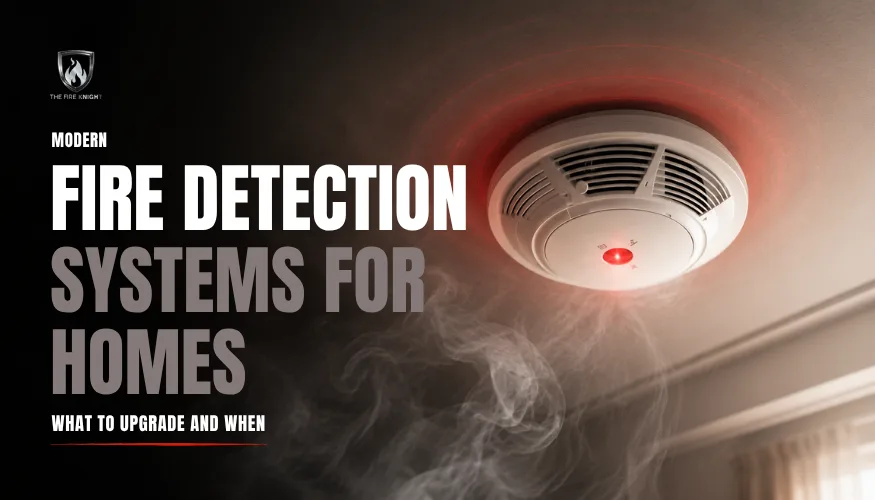
A smoke alarm does one job well: it tells whoever is in the building that something is wrong. Everything after that depends on a person hearing it, understanding what it means and acting in time. Home and office fire protection is changing because that assumption fails so often, and because the technology to close the distance between the alarm and the response now exists.
What the data says about alarms in homes and workplaces
Fire and rescue services in England attended 26,180 dwelling fires and 13,679 fires in other buildings in the year ending March 2026, according to Home Office fire statistics. In dwelling fires, a smoke alarm was present and raised the alarm in 48 percent of cases. In 19 percent an alarm was present but did not operate, in 10 percent it operated without raising the alarm, and in 23 percent there was no alarm at all.
Timing tells the second half of the story. The average total response time was 8 minutes 15 seconds for dwelling fires and 9 minutes 12 seconds for other buildings. Those are creditable figures nationally, but they describe minutes in which a fire grows unopposed, and they start only once someone raises the alarm.
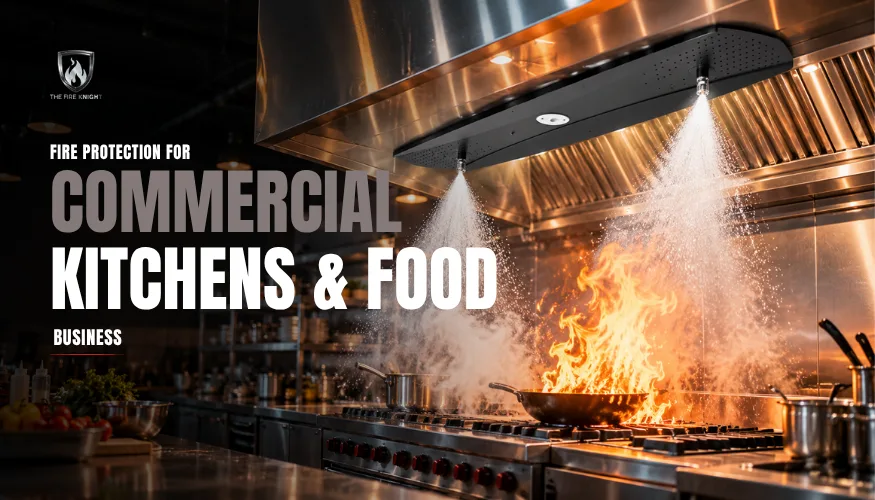
The causes point the same way. Cooking appliances accounted for 42 percent of accidental dwelling fires, and electrical distribution was the largest specified ignition source in other building fires at 17 percent. Both start in places nobody is watching, which is why early fire detection only pays off when something acts on what it finds.
What smart fire protection actually means
The word smart is used loosely. In fire safety it should describe four specific capabilities, and a product worth buying can demonstrate each of them.
- Verified detection: flame sensing, rate of rise heat and gas monitoring combined, so the device confirms a real fire before it acts. Verification is what makes automatic response acceptable in a kitchen or an open plan office.
- Connected alerting: notification by app, SMS and email, so the alert reaches the owner, the duty manager or a monitoring centre rather than an empty room.
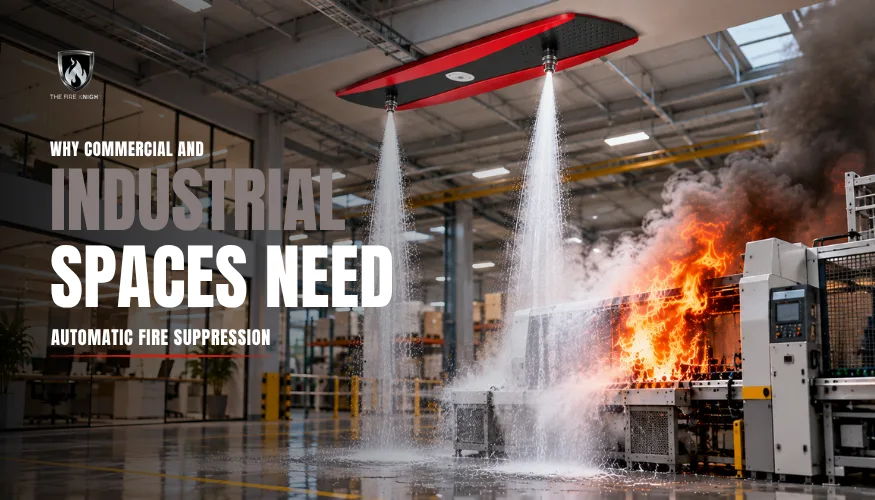
- Automatic first response: suppression aimed at the seat of the fire during the minutes before the fire service arrives.
- System health reporting: fault, low battery and connectivity warnings. This is the direct answer to the alarms that were present but did not operate.
Standards sit underneath all of it. The ISO 7240 series covers fire detection and alarm systems internationally, with ISO 7240-14 covering design, installation, commissioning and servicing in and around buildings, while in Europe smoke alarm devices for dwellings are covered by EN 14604. Connected features sit on top of these requirements. National legislation and the local fire authority still decide what is mandatory in a given building.
Homes and offices do not need the same thing
A home fails differently from a workplace. In a house the risk concentrates in the kitchen and in the hours when the family is asleep or out; modern home fire detection has to work without anyone supervising it. In an office the risk sits in electrical infrastructure and in the long stretches when the building is empty, and the consequences include lost data, lost records and interrupted trading.
| Space | What typically goes wrong | System that fits |
| Kitchens and living areas | Cooking appliances, the largest single cause of accidental dwelling fires | The Protector |
| Offices, retail and hospitality floors | Ignition out of hours, with nobody present to respond | The Protector |
| Server rooms, comms and electrical cabinets | Electrical distribution faults inside enclosed spaces | The Comodo |
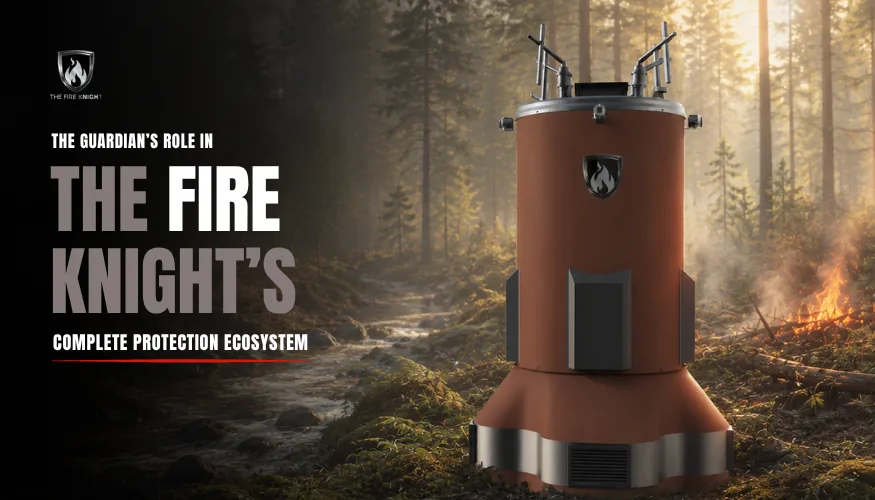
| Grounds, outbuildings and rural boundaries | External fire reaching the building, often where there is no mains power | The Guardian |
What smart protection does not replace
Connected technology changes the response, not the obligations. Required detection and alarm provision, escape routes and evacuation planning all remain in force, and in most jurisdictions a workplace still needs a documented fire risk assessment. Simple measures keep their value too: research by the Fire Safety Research Institute on closing internal doors recorded far lower temperatures and carbon monoxide levels in rooms behind a closed door than in rooms left open.
The Fire Knight systems are fire suppression aids and are not classified as fire extinguishers. They are designed to buy time and limit damage alongside mandatory provisions, planned maintenance and the fire service, not in place of them.
A practical upgrade sequence
- Assess the risk: list the ignition sources, and be honest about who would respond and when nobody is there.
- Fix the basics: working alarms, correctly sited, tested on a schedule.
- Add verification and connected alerting: so a confirmed alert leaves the building instantly.
- Add automatic response where risk concentrates: the kitchen, the server room, the plant room.
- Maintain and review: test, service and revisit the assessment when the building or its use changes.
Frequently asked questions
1. What makes a fire system smart rather than simply connected?
A connected device sends a notification. A smart system verifies the fire across more than one sensor and then acts on it, which is the difference between being told and being helped.
2. Will an automatic system activate during normal cooking?
It should not. Multi-sensor confirmation exists precisely to separate cooking smoke and steam from a developing fire, so ask any supplier how their device verifies before it deploys.
3. Does a smart system remove the need for a fire alarm system at work?
No. Statutory detection, alarm and evacuation duties remain with the responsible person, and a suppression aid is an addition to that provision rather than a substitute for it.
Plan your next upgrade
Most homes and offices are protected well enough when someone is present, and hardly at all for the hours when nobody is. Explore The Fire Knight systems or speak with our team about the spaces you need covered.