 5 min read
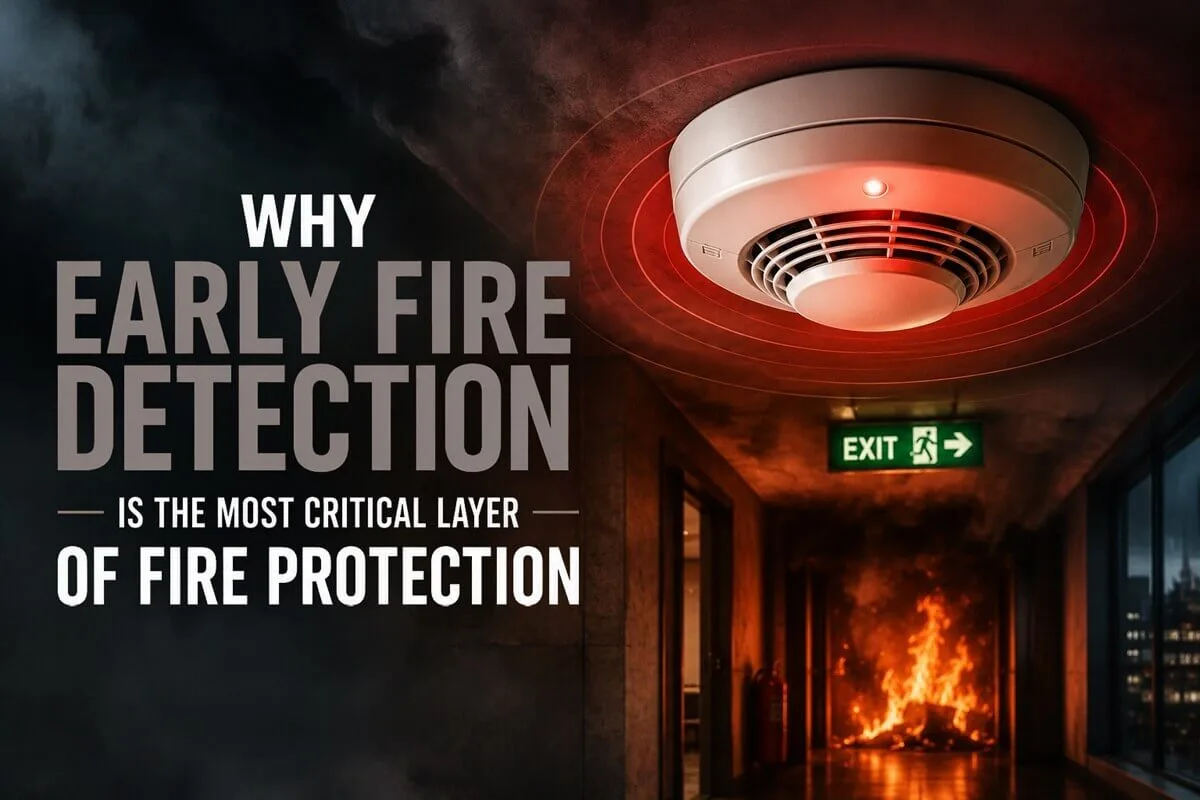
Fire protection is usually judged by what happens after a fire is confirmed: the alarm sounds, people evacuate, suppression activities and the emergency services arrive.
Every one of those measures depends on an earlier event, which is the moment the fire is detected. Detection starts the clock for everything that follows, and in modern buildings, vehicles and outdoor sites that clock runs faster than most operators assume.
The intervention window has become much shorter
Research published by the Fire Safety Research Institute, part of UL Research Institutes, compared identically arranged rooms furnished with natural materials and with modern synthetic materials. The rooms containing synthetic furnishings reached flashover in roughly three to five minutes.
The rooms furnished with natural materials took around thirty minutes or did not reach flashover within the test period at all.
Flashover is the point at which nearly every combustible surface in a compartment ignites. Beyond it, survivability drops sharply and manual intervention becomes far more dangerous.
The consequence is straightforward. A detection delay of a few minutes no longer costs a few minutes of extra damage. It can consume the entire safe intervention window, which is why detection, rather than suppression capacity, is often the layer that decides the outcome.
What early fire detection actually means
Early detection is not a single technology. It is the selection of a sensing method that suits the hazard, the environment and the speed at which a fire is likely to develop there.
- Smoke detection: point detectors for occupied spaces, including homes and offices, and aspirating systems that sample air continuously for very early warning in sensitive areas such as data centres and switch rooms.
- Heat detection: fixed temperature and rate of rise sensing, suited to dusty, humid or contaminated environments where smoke detection causes unwanted alarms.
- Flame detection: infrared sensors that respond to the heat signature of a fire rather than visible light, so they remain effective in darkness, smoke and poor weather.
- Visual and video detection: camera based analysis for large open areas and locations where smoke will not reach a ceiling mounted device.
Internationally, the ISO 7240 series covers fire detection and alarm systems, including ISO 7240-14 for the design, installation, commissioning and servicing of systems in and around buildings, ISO 7240-20 for aspirating smoke detectors and ISO/TS 7240-29 for video fire detectors.
In Europe the EN 54 series performs a comparable function. National legislation and the local fire authority still determine what is legally required in any given market, so detection design should always follow a documented fire risk assessment rather than a product preference.
Where the detection gap is widest
Conventional detection assumes that someone is present to hear an alarm and act on it. That assumption breaks down in several common situations:
- Remote and off-grid sites with no mains power and no permanent staff, including forestry, agricultural, power and telecommunications infrastructure.
- Enclosed compartments such as server rooms, generator enclosures and plant rooms, where a fire can develop unobserved.
- Vehicles, fleets and heavy machinery, where fires often begin out of sight in engine bays, battery compartments or hydraulic systems.
- Commercial buildings outside operating hours, where an alarm may sound for a long period before anyone responds.
In each case the fire is detected eventually. The problem is that it is detected late.
Detection is only valuable when it triggers something
Modern fire technology narrows the gap between detection and response by combining three functions: continuous sensing, immediate connected alerting to the people who can act, and automatic activation of suppression at the source. Remote monitoring adds situational awareness at sites that are rarely attended.
| Environment | Typical detection gap | Fire Knight system |
|---|---|---|
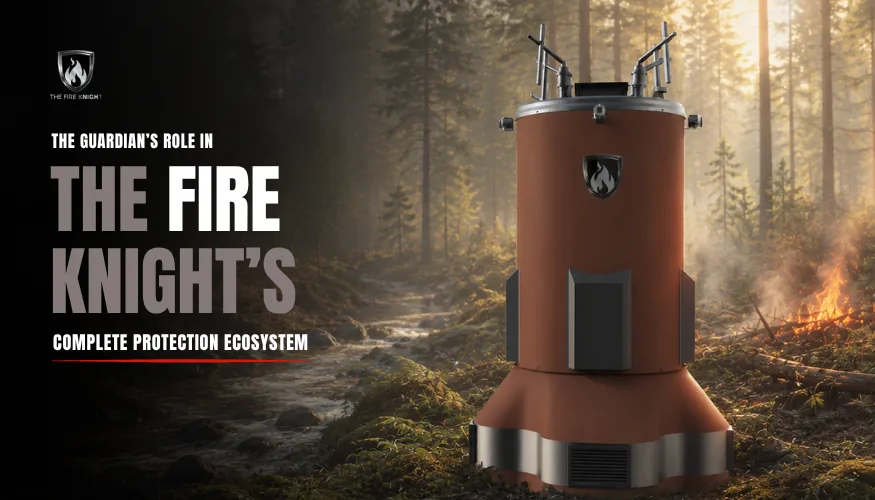
| Outdoor, forestry and remote infrastructure | No mains power, no staff on site | The Guardian |
| Homes, offices and warehouses | Alarm sounds with nobody present to respond | The Protector |
| Server rooms, generator enclosures, recreational vehicles | Small, unattended, high value spaces | The Comodo |
| Vehicles, fleets and heavy machinery | Fire starts out of sight in engine or battery bays | The Sentinel |
| Mobile plant and equipment enclosures | Assets move away from fixed protection | The Ranger |
The Fire Knight systems are fire suppression aids and are not classified as fire extinguishers. They are designed to support a wider fire safety strategy alongside mandatory detection, alarm and suppression provisions, emergency planning and the fire service, not to replace them.
Building a layered strategy in the right order
- Risk assessment: identify the ignition sources, fuel loads and consequences specific to the site.
- Early detection: match the sensing technology to the hazard and environment.
- Connected alerting: ensure the alert reaches a person or system able to act.
- Suppression support: provide a response at the source during the earliest stage of fire growth.
- Emergency planning: define evacuation, isolation and escalation procedures.
- Maintenance and testing: verify that every layer remains functional over time.
Frequently asked questions
1. How fast can a fire become unsurvivable?
Fire Safety Research Institute testing recorded flashovers in around three to five minutes in rooms furnished with modern synthetic materials, compared with roughly thirty minutes for natural furnishings.
2. Which detection method suits outdoor and remote sites?
Infrared flame detection performs well outdoors because it responds to heat signatures rather than visible light, and solar supported power allows continuous operation without a mains supply.
3. Does automatic suppression replace fire alarms or sprinklers?
No. Suppression aids complement legally required fire protection systems and do not remove any statutory obligation.
4. Which standards apply to fire detection systems?
The ISO 7240 series applies internationally and the EN 54 series applies across Europe, while national legislation and local fire authority requirements determine what is mandatory in each jurisdiction.
Assess your detection gap
If your site, fleet or infrastructure depends on someone noticing a fire in time, review the detection layer first. Explore The Fire Knight systems or speak with our team about the environments you need to protect.