Wildfire Protection Systems

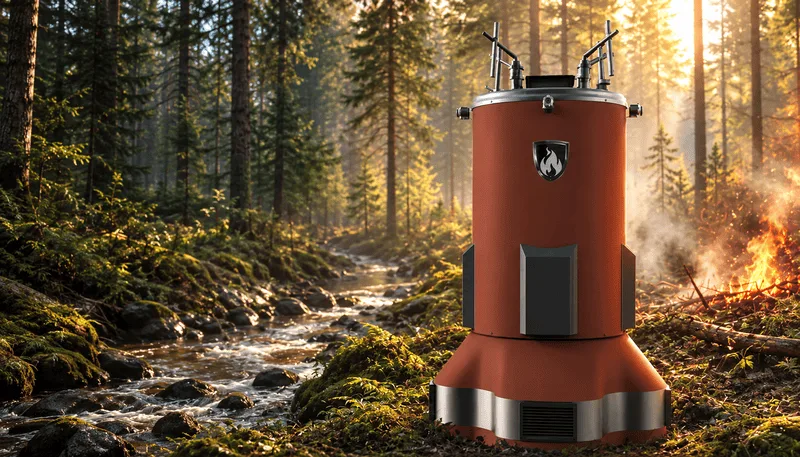
Wildfire arrives at a property long before a crew can. The Fire Knight provides autonomous wildfire protection for homes, farms, forestry, utilities and remote sites across the United States, the United Kingdom and Canada. The Guardian watches your boundary with infrared sensing, runs on solar power, and suppresses fire at the source without anyone being there to start it.
wildfire protection system
The Challenge

Wildfire Does Not Wait For Someone To Be Home

Wildfire protection fails in a predictable way. The equipment exists, but it needs a person to deploy it, a mains water supply to run it, or a warning that arrives in time to act. On a rural property, a farm boundary, a substation or a forestry block, none of those can be relied on. Fires start at night, during holidays, and in places nobody visits for days.

The scale keeps rising. The National Interagency Fire Center recorded 64,897 wildfires burning 8,924,884 acres across the United States in 2024. Natural Resources Canada reports more than 8,000 wildland fires a year burning an average of over 2.1 million hectares, and in the record 2023 season more than 14.6 million hectares burned and over 230,000 people were evacuated. In the United Kingdom, analysis of Global Wildfire Information System data found more than 40,000 hectares burned in 2025, close to four times the average for that point in the year across 2012 to 2024.
Where The Risk Begins

Six Ways Wildfire Reaches Your Property

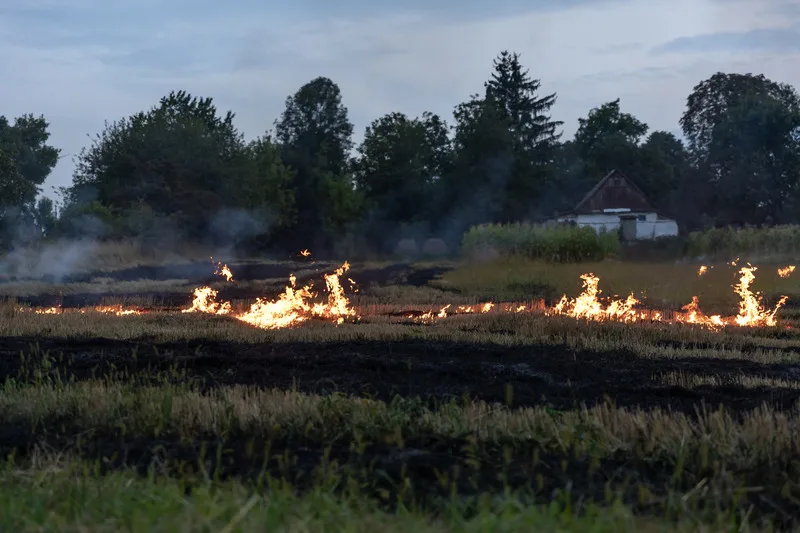
A wildfire rarely arrives as a wall of flame. It arrives in pieces, and most of them land while nobody is watching.

Ember Attack

Wind carries burning embers well ahead of the fire front, landing on roofs, in gutters and against walls. The Insurance Institute for Business and Home Safety describes ember storms as the greatest danger to homes and businesses in the wildland urban interface.

Fuel At The Boundary

Dry grass, scrub, stacked timber and unmanaged vegetation along a fence line give fire a continuous path from open country straight to your buildings.

Outbuildings And Decking

Sheds, barns, carports, decking and fuel stores ignite easily and then burn close enough to the main structure to carry the fire into it.

Unstaffed Infrastructure

Substations, telecom towers, pump stations and water assets sit alone for weeks. A fire there is discovered by its outage, not by a person.

Long Response Times

Rural crews travel further, may be committed to other fires during a major event, and often have to choose which properties they can defend.

No Power And No Water Main

Many at risk properties lose grid power early in an event, and most rural sites never had a mains supply or a pump house to begin with.

The Guardian: Built For Outdoor And Remote Sites

The Guardian is engineered for the ground outside the building line: boundaries, yards, plantations, farm assets and remote infrastructure. It uses 360 degree infrared detection, which responds to the heat signature of a fire rather than to visible light, so it keeps working in darkness, smoke and poor weather. A solar supported battery system runs it off grid, and it discharges from its own tank rather than a mains supply.

Key Benefits

No One Needs To Be There

Detection and release happen on site and on their own, so protection does not depend on someone arriving to set it up.

Works Without Power Or A Water Main

Solar supported batteries and an onboard tank of 1,000, 2,000 or 3,000 litres, with up to twelve minutes of continuous discharge.

Protection That Lasts Past The Event

The water based retardant treats the ground it lands on for up to fourteen days, holding a defensible perimeter rather than drying out in an hour.

How It Works

From Detection To Suppression, Automatically

Detection

Infrared sensing scans a full 360 degrees for the heat signature of fire, day or night, through smoke and weather that would blind a camera.

Activation

The unit activates on its own. An operator can also see the site remotely and release early when a front is approaching, rather than waiting for it to arrive.

Discharge

Targeted nozzles deliver a water based, non toxic and biodegradable retardant across the area at risk, covering up to 60 metres in diameter per unit.

Notify

Connected alerts reach the owner or duty manager through the app, SMS and email when a fire event, discharge, low battery or system fault occurs.

Why Choose Us

What Makes The Fire Knight Different

We are not a traditional fire extinguisher company. We engineer autonomous suppression systems, a fundamentally different category of fire protection technology.

Internationally Patented Technology

All Fire Knight systems are protected under International Patent Application No. PCT/AU2023/050224, filed across Australia, India, the United Kingdom, the United States, Canada and Europe. This is original, protected engineering rather than repackaged equipment.

Fully Autonomous Operation

Our systems detect and respond without human activation. That is the difference between protection you own and protection that depends on somebody being home, on shift, or able to reach the property in time.

Infrared Detection On Site

The Guardian responds to the heat signature of an actual fire at your boundary, not to a general warning or a fire tracked somewhere in the region. It sees through smoke, darkness and poor weather.

Eco Safe Suppressants

All suppression uses water based, non toxic, biodegradable retardants that are safe for crops, livestock, wildlife, soil and water bodies. The ground treatment continues to protect after the initial event, with no harmful chemicals.

Built For Off Grid Sites

Solar supported power and an onboard tank mean no mains electricity, no water main and no pump house. That is what makes protection possible on land where none of those exist.

International Standards Compliance

Engineered to ASME BPVC VIII Div.1, EN 13445, PD 5500, NATA, CE and ISO 9001 standards. Compliance documentation is available for regulatory submissions, insurance purposes and procurement approvals.
Facility Coverage

Protection For Every Property In The Path

One autonomous approach, positioned around the assets you cannot afford to lose.

Rural Homes And Estates

Properties at the wildland edge, often at the end of a long access road with limited water on site.

Farms And Agriculture

Barns, machinery sheds, hay and feed stores, and standing crop that carries fire quickly across open ground.

Forestry And Plantations

High value timber blocks and conservation land where ignition is often far from any road or crew.

Power And Substations

Distribution assets that both face wildfire risk and can start one, usually with nobody on site.

Telecom And Remote Utilities

Towers, shelters, pump stations and water assets where an outage is the first sign of a problem.

Industrial And Remote Camps

Work camps, depots, yards and laydown areas with fuel, plant and accommodation in one place.
Staying Ready

What Keeps Industrial Protection Reliable

A suppression system is only as good as its last inspection. These six practices decide whether protection still works on the day it is finally needed.

Assess The Property First

Map the approach a fire would take, the assets you cannot lose and the places nobody visits. Unit positions follow from that.

Keep The Fuel Down

Clear vegetation, gutters and stored timber before each season. No system performs well with fuel banked against the building.

Check Tanks And Nozzles

Confirm tank level, pressure and nozzle aim before the season starts, and again after any discharge or severe weather.

Service Power And Solar

Clean panels, check batteries and confirm charging. Off grid protection is only as reliable as the power behind it.

Test Alerts And Contacts

Make sure alerts still reach the right people, and update the contact list when staff, tenants or managers change.

Keep Records For Insurers

Log every check and discharge. Evidence of maintained protection is what an insurer or regulator asks for after an event.

RECOMMENDED

The Fire Knight Wildfire Product

Purpose-built wildfire protection systems are designed to detect, respond to, and suppress fire threats before they spread across vulnerable areas.

The Guardian

An autonomous outdoor unit for boundaries, yards, plantations, farm assets and remote infrastructure. It detects fire on site with infrared sensing, runs on solar supported power and discharges from its own tank, so it protects land where there is no mains supply and nobody present.

FAQ

Does the system work if nobody is at the property?
Yes, and that is the point of it. Detection and release happen on site without a command, so the system does not depend on someone being home, reaching the property through road closures, or activating anything from an app.
The Guardian runs on a solar supported battery system and discharges from its own tank, with options of 1,000, 2,000 or 3,000 litres. That is what makes it suitable for forestry blocks, farm boundaries, substations and remote camps where no services exist.
It depends on the layout, since each unit covers up to 60 metres in diameter. Properties are usually protected by placing units around the assets that matter most and the direction fire is most likely to approach from, rather than by trying to cover every boundary.
No. The Fire Knight systems are fire suppression aids and are not classified as fire extinguishers. Vegetation management, building preparation, an evacuation plan and the fire service all remain essential. An autonomous unit adds early action in the minutes when none of those can reach you.
Wildfire And Rural Solutions

Protect Your Property Before The Next Season

Whether you are protecting a single rural home or hundreds of remote assets across a network, The Fire Knight can help you assess your wildfire exposure and identify an appropriate protection strategy.